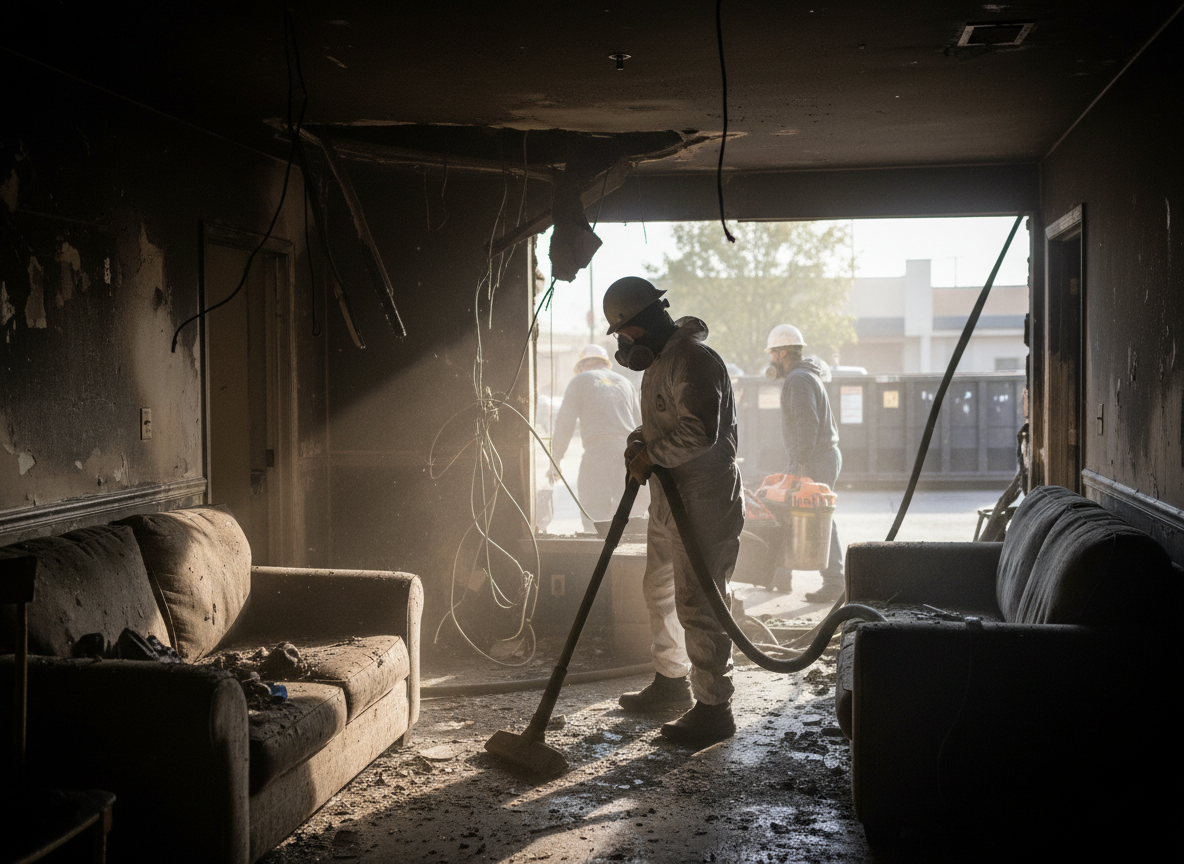
Apartment fires in Laredo often start in kitchens or from overloaded circuits in older buildings common in Downtown and Del Mar. Soot travels through shared HVAC systems and settles into porous materials like carpet, drywall, and cabinetry faster than most owners expect. The hot semi-arid climate dries residue quickly, locking it into surfaces and making removal harder if not addressed within hours. Crews must separate salvageable items from those that will off-gas odors later, working around neighboring units that share walls and vents.
Smoke from apartment fires carries alkaline residues that corrode metal fixtures and electronics even after visible soot is gone. In Hillside and Los Presidentes complexes built on slab foundations, moisture from suppression water can migrate under flooring and create hidden mold within days of hot summer temperatures. Technicians test pH levels on every surface, remove affected drywall to the nearest stud, and run negative-air machines to prevent cross-contamination into hallways and adjacent apartments.
Webb County building codes require permits for any structural work after fire damage. Apartment managers in Laredo often need units turned over quickly for new tenants, so cleanup plans must account for both code compliance and tight scheduling. Materials such as textured ceilings and vinyl plank flooring common locally trap odor differently than standard drywall, requiring specific solvents and repeated air scrubbing that generic restoration methods miss.
Wind patterns across the Rio Grande plain can push smoke into units that were never on fire. Restoration teams document every affected apartment with photos and moisture readings before starting, then coordinate with property management to sequence work so residents in nearby units experience minimal disruption during the process.
Technician insight
In Laredo, the thing that catches most people out with Apartment Fire Cleanup is how fast the dry heat sets soot into textured ceilings common in 1980s and 1990s complexes in Del Mar and Los Presidentes. Once it bakes in, you cannot wipe it off without leaving streaks that show under new paint.
Shared-wall smoke in a Del Mar complex
A kitchen fire in one unit sent smoke through the return vents into three neighboring apartments. We found alkaline residue on metal door frames and inside the shared ductwork. After isolating the HVAC zones and performing staged cleaning, the three unaffected units passed air testing and reopened within five days.
How it works
- 1
Initial Assessment
Technicians arrive within hours, document damage, test for hidden smoke migration through vents and shared walls, and create a scope that protects neighboring units.
- 2
Soot and Residue Removal
HEPA vacuums and alkaline cleaners lift soot from ceilings, walls, and contents; all porous materials are evaluated for salvage or disposal.
- 3
Odor Neutralization
Thermal fogging and ozone treatments address smoke trapped in HVAC systems and behind cabinets typical in Laredo apartment construction.
- 4
Final Clearance
Air quality testing and walkthrough with management confirm the unit meets habitability standards before re-occupancy.
Pricing
Cost depends on square footage affected, number of units impacted, and whether HVAC systems require full cleaning; estimates provided after on-site assessment.