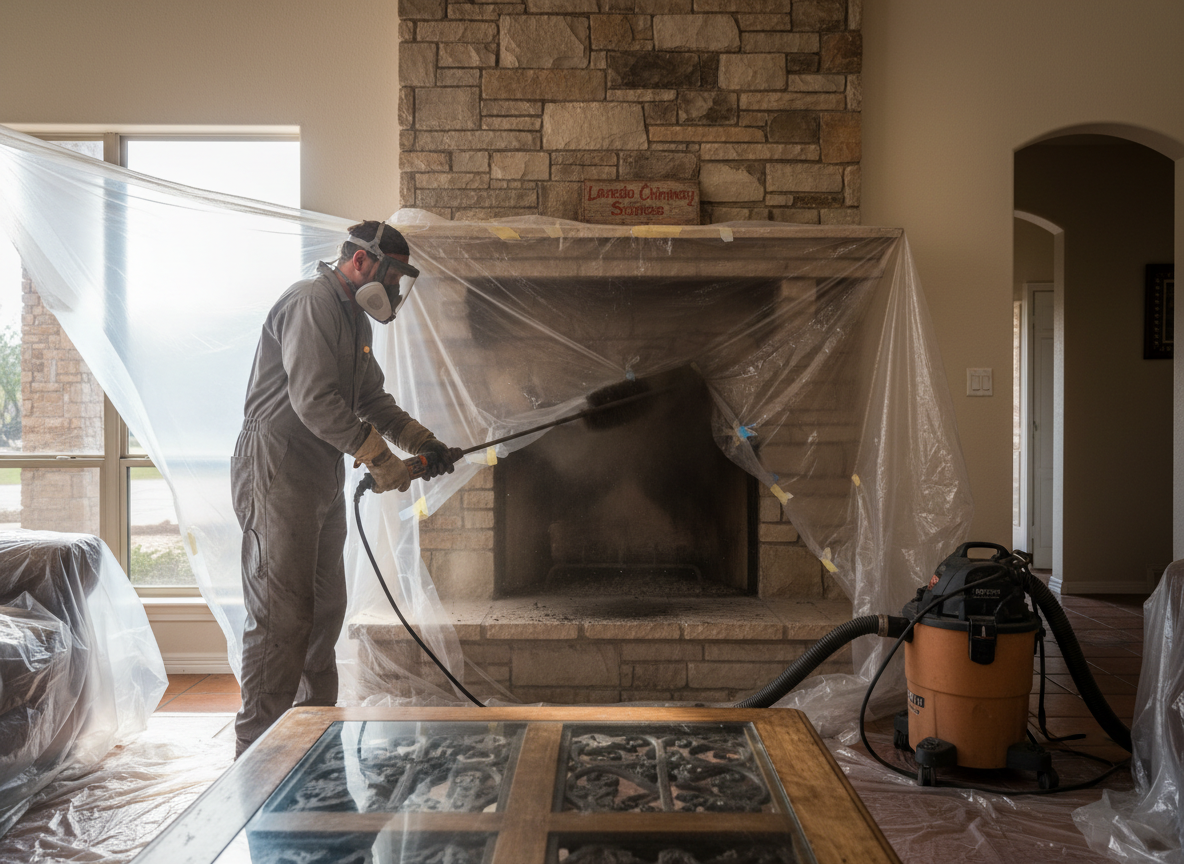
Soot from structure fires in Laredo settles into porous materials like the plaster and wood found in older Downtown and San Agustin Plaza homes. Hot semi-arid summers accelerate oxidation on metal surfaces while mild winters keep humidity low enough that dry soot particles remain airborne longer during cleaning. Technicians must separate protein-based soot from synthetic residues because each requires different pH-neutral solvents to avoid etching tile or concrete floors common in Del Mar properties.
Webb County building stock from the 1960s onward often features textured ceilings and HVAC returns that trap fine carbon particles. Standard vacuuming fails here because the region’s frequent dust storms reintroduce particulates if negative-air machines are not sealed at every exterior penetration. Crews map airflow paths through single-story ranch layouts typical of Los Presidentes before any surface work begins.
Code compliance in Laredo requires that restored spaces meet current fire-blocking standards when walls are opened for hidden soot. Technicians document every layer removed so homeowners near McAllen or Mission can verify that no residue remains to corrode copper wiring during the next high-temperature stretch.
Seasonal Considerations
Laredo’s summer heat demands shorter work windows to prevent solvent flash-off, while winter jobs allow longer dwell times on vertical surfaces without rapid drying.
Technician insight
In Laredo, the thing that catches most people out with Soot Removal is how the hot semi-arid winds push fine particles deep into the textured ceilings of 1970s Del Mar homes; if you skip sealing every return vent before you start, the next dust storm undoes the whole job.
Soot in Hillside Attic
A kitchen fire in a Hillside residence sent oily soot upward through ceiling penetrations. We found heavy accumulation on insulation batts and rafters that standard fans had pushed farther into the space. Negative pressure was set at the ridge vent, insulation was removed, and rafters were cleaned with pH-adjusted solutions. The homeowner could reopen the home without odor complaints once the system was restored.
How it works
- 1
Site Assessment
Technicians inspect all affected rooms in the Laredo property, noting soot migration through HVAC and attic spaces typical of local construction.
- 2
Containment Setup
Negative pressure zones are established using sealed barriers to prevent cross-contamination into unaffected areas like hallways or garages.
- 3
Surface Cleaning
Appropriate cleaning agents are applied based on soot type, followed by HEPA vacuuming and repeated wiping until no residue transfers.
- 4
Air Scrubbing and Verification
Air scrubbers run until particle counts return to baseline, then surfaces are tested with white-cloth methods before clearance.
Pricing
Pricing depends on square footage affected, soot type, and whether HVAC cleaning is required; we provide upfront quotes after inspection.