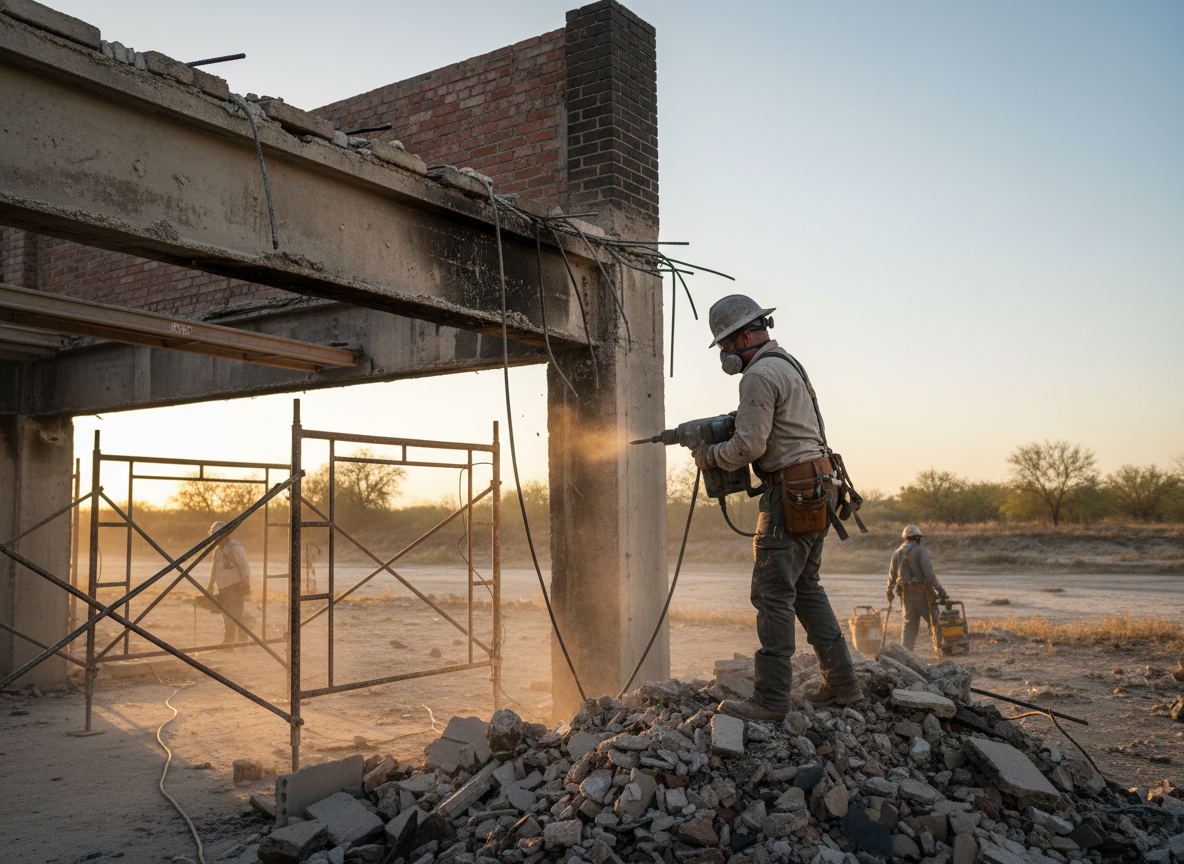
Laredo homes built before the 1980s in Downtown and Del Mar often feature wood-frame construction with plaster or stucco over lathe that hides char damage deep in joists. After a fire, we inspect load paths from roof to foundation because hot semi-arid summers dry out remaining timber fast, increasing the chance of hidden rot once monsoon moisture arrives. In Webb County, older Hillside and Los Presidentes properties sit on clay soils that shift with temperature swings, so any compromised sill plates must be sistered or replaced before drywall goes back. We coordinate with local inspectors to meet current wind-load requirements that apply even on interior repairs.
When fire reaches roof decking near San Agustin Plaza or the Republic of the Rio Grande Museum area, we remove and replace affected rafters while keeping the structure weather-tight during Laredo’s intense summer heat. Charred studs in load-bearing walls are cut out and new lumber is toe-nailed with hurricane ties to restore shear strength. We also check for smoke residue inside HVAC returns that can re-contaminate repaired spaces if left untreated. All work is performed from our 24/7 base at 7917 McPherson Rd Ste 205 so crews can respond the same night a fire department clears the scene.
Seasonal Considerations
Laredo’s mild winters allow year-round structural work, yet the hot summers accelerate adhesive cure times and require extra hydration breaks for crews handling heavy beams. Clay soils in the region expand after rare rains, so temporary shoring must account for movement that can twist newly installed headers if not braced correctly.
Common Edge Cases
Homes near McAllen or Mission that were expanded without permits often have mismatched lumber grades; we match species and grade stamps to avoid future differential movement. Electrical wiring run through fire-damaged walls must be replaced to current NEC standards before any new sheathing is installed.
Technician insight
In Laredo, the thing that catches most people out with Structural Repair After Fire is how quickly the dry climate shrinks replacement lumber if it sits even one day in the truck bed before installation; we keep stock acclimated on site. Clay soils around Hillside also mean any new sill plates must be anchored with extra bolts or the whole wall can rack during the next temperature swing.
Downtown Laredo Beam Replacement
A kitchen fire in a 1970s Del Mar home left the main living-room header heavily charred. We found the beam had transferred heat into two adjacent studs resting on shifting clay soil. Temporary jacks were set, the header and studs were swapped with properly graded lumber, and the floor was re-leveled before drywall restoration.
How it works
- 1
Initial Assessment
We document all visible and hidden structural damage using moisture meters and borescopes, then mark load-bearing members that require replacement.
- 2
Shoring and Safety
Temporary supports are installed to stabilize the structure before any charred material is removed.
- 3
Material Removal and Replacement
Damaged joists, studs, and headers are cut out and new pressure-treated lumber is installed to match original spans.
- 4
Inspection and Finishing
Webb County inspectors review the work, after which fire-rated drywall and insulation are reinstalled.
Pricing
Upfront quotes provided after on-site inspection; final cost depends on extent of structural damage and access conditions.