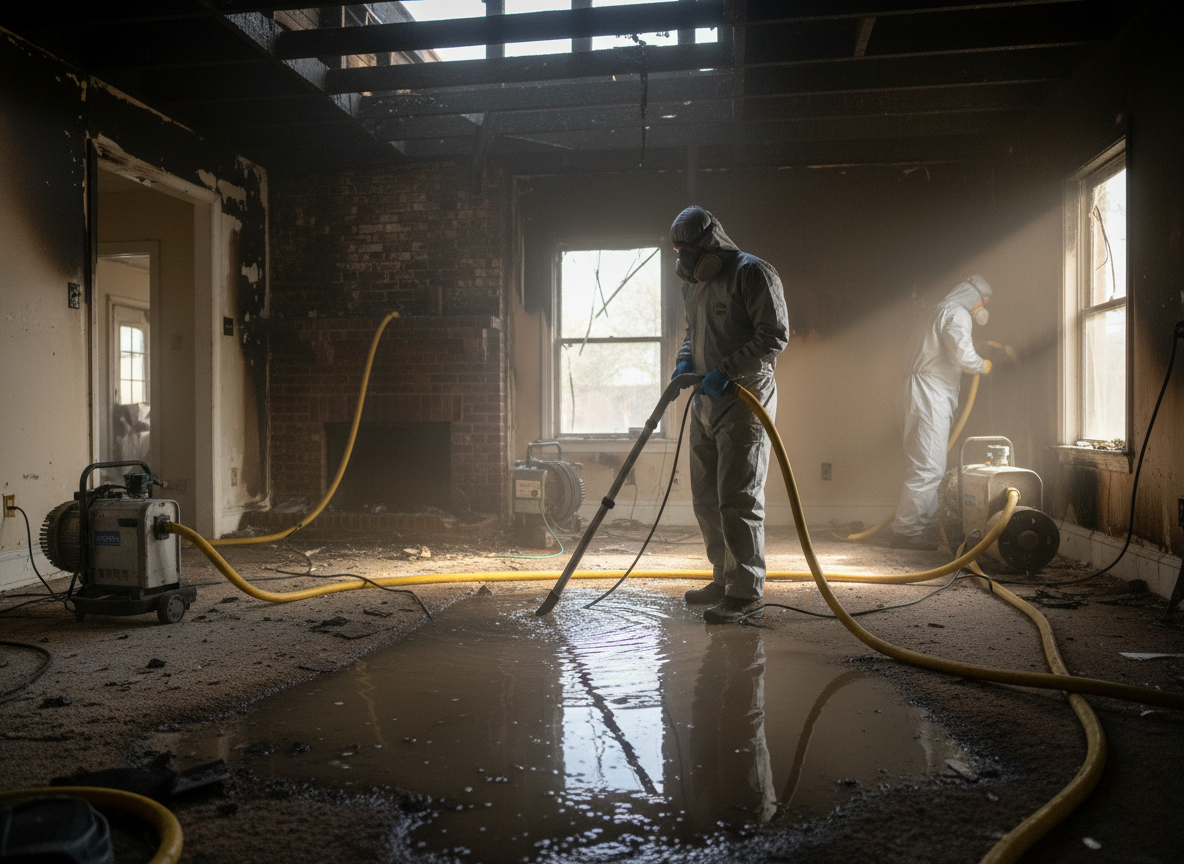
Laredo’s older housing stock in Downtown and around San Agustin Plaza often features wood-frame construction with plaster or stucco finishes that trap soot and moisture after a fire or flood event. When summer temperatures climb above 100 degrees, rapid surface drying can hide lingering dampness inside wall cavities, leading to hidden mold growth if extraction is incomplete. Crews must open cavities early and use moisture meters on multiple layers because the hot semi-arid air evaporates water from the exterior while interior layers stay saturated.
Flash flooding from the Rio Grande or heavy rains in Webb County can push water into crawl spaces and slab homes common in Del Mar and Hillside neighborhoods. Concrete slabs here sit on expansive clay soils that swell and crack when saturated, allowing water to migrate under finished flooring. Restoration requires pulling baseboards, drilling weep holes, and running air movers for extended periods even after visible water is gone, because residual humidity in the soil keeps feeding moisture back into the structure.
Smoke residue in Laredo’s dry climate bonds differently to porous surfaces such as the limestone and brick found near the Republic of the Rio Grande Museum and Laredo Center for the Arts. Alkaline soot from typical residential fires etches these materials if not neutralized within the first 48 hours. Technicians test pH levels on-site and apply appropriate rinses rather than relying on standard degreasers that can leave films in low-humidity conditions.
Properties in Los Presidentes and near McAllen or Mission often share HVAC systems that spread smoke or musty odors between units after an incident. Sealing and isolating ductwork before cleaning prevents cross-contamination, and crews document every register and return to confirm airflow is restored only after odor and particulate testing passes.
Technician insight
In Laredo, the thing that catches most people out with Fire and Flood Restoration is how fast the surface dries in our 100-degree summers while the clay soil under the slab stays wet for weeks. Homeowners in Del Mar or Hillside often think the job is done once the carpet is pulled, but if we don’t keep air movers running and check under the slab, the moisture keeps wicking back up and ruins new flooring within months.
Slab Leak After Kitchen Fire in Del Mar
Firefighters extinguished a stove fire but soaked the kitchen and adjacent slab. We found standing water had migrated under the tile into the living room because of the home’s slight slope toward the street. Extraction, weep holes drilled at the slab edge, and four days of drying prevented mold under the new flooring.
How it works
- 1
Initial Assessment
Technicians arrive within hours, document affected rooms in the specific neighborhood, and test moisture levels in walls, floors, and attic spaces.
- 2
Water Extraction and Soot Removal
Standing water is removed first, followed by HEPA vacuuming and alkaline cleaning of smoke residue on Laredo’s common plaster and masonry surfaces.
- 3
Drying and Dehumidification
Industrial air movers and dehumidifiers run until moisture readings match unaffected areas, with daily logs kept for homes in high-clay soil zones.
- 4
Sanitization and Odor Control
Antimicrobial treatments and air scrubbers address bacteria and smoke odors that linger in older Downtown construction.
- 5
Final Verification
Post-job moisture and air-quality checks confirm the structure is dry before any reconstruction begins.
Pricing
Upfront written quotes follow the inspection; final cost depends on square footage affected, number of rooms requiring cavity drying, and soil conditions.