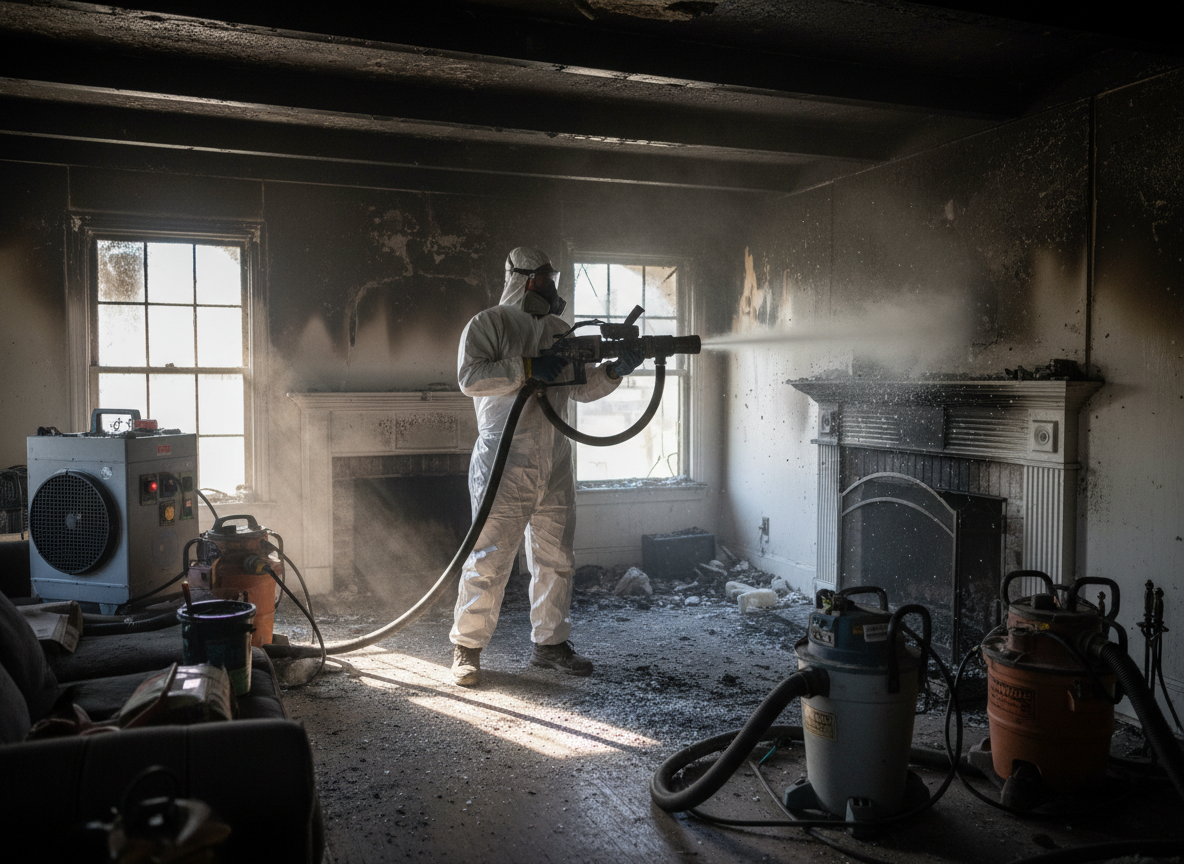
Smoke remediation in Laredo requires addressing how the region's hot semi-arid climate with mild winters and hot summers allows fine soot particles to penetrate porous materials like plaster and wood framing common in older homes near San Agustin Plaza and the Republic of the Rio Grande Museum. Dry air prevents natural settling, so technicians must use negative air machines and thermal fogging to reach crevices in stucco exteriors and attic spaces that standard cleaning misses. In Webb County properties, especially those in Hillside or Los Presidentes with mixed brick and frame construction, untreated smoke can corrode HVAC systems and leave persistent odors that travel between rooms through shared ductwork.
Edge cases arise when fires originate in kitchens or garages of Del Mar residences, where grease-laden smoke bonds to surfaces and requires alkaline cleaners followed by odor-neutralizing sealants. Local terrain with flat, low-lying areas near the Rio Grande increases humidity spikes during rare rains, which can reactivate hidden residues weeks after initial cleaning. Homeowners in McAllen or Mission who commute to Laredo often overlook secondary smoke migration into vehicles or outbuildings, leading to repeated complaints if the primary structure is not fully isolated during work.
Code considerations include ensuring post-remediation air quality meets local standards before reoccupancy, particularly in multi-unit buildings downtown where shared walls allow odor transfer. Technicians inspect for hidden char in insulation and subfloors, as the intense summer heat can bake residues deeper into materials. Upfront assessment at the 7917 McPherson Rd location helps map affected zones before deploying equipment.
Technician insight
In Laredo, the thing that catches most people out with Smoke Remediation is how the hot semi-arid climate lets smoke travel through the open floor plans and older plaster walls common in Downtown homes near San Agustin Plaza. Homeowners assume wiping visible surfaces fixes it, but the dry air keeps particles airborne until we run negative pressure for days, and summer heat bakes residues into insulation that only shows up during the next mild winter humidity shift.
Kitchen Fire Smoke in Del Mar Residence
A grease fire sent smoke through the kitchen into living areas of a 1970s Del Mar home. We found heavy soot in the attic ducts and on textured ceilings that standard wipes would miss. Negative air machines and targeted alkaline cleaning removed residues while isolating the HVAC. The family returned with no odor transfer to adjacent rooms.
How it works
- 1
Initial Assessment
Inspect all affected rooms, HVAC, and attics for soot depth and odor sources using specialized meters.
- 2
Containment Setup
Seal off zones with plastic barriers and negative air pressure to prevent cross-contamination in connected Laredo homes.
- 3
Soot Removal
Apply dry sponges, HEPA vacuums, and chemical agents suited to porous surfaces found in older Webb County construction.
- 4
Odor Neutralization
Use ozone or hydroxyl generators followed by sealing to lock in residues after the hot, dry air has been accounted for.
- 5
Final Verification
Test air quality and surfaces before releasing the property, confirming no lingering smoke in nearby neighborhoods like Del Mar.
Pricing
Costs depend on square footage affected, depth of soot penetration, and whether HVAC cleaning is required.