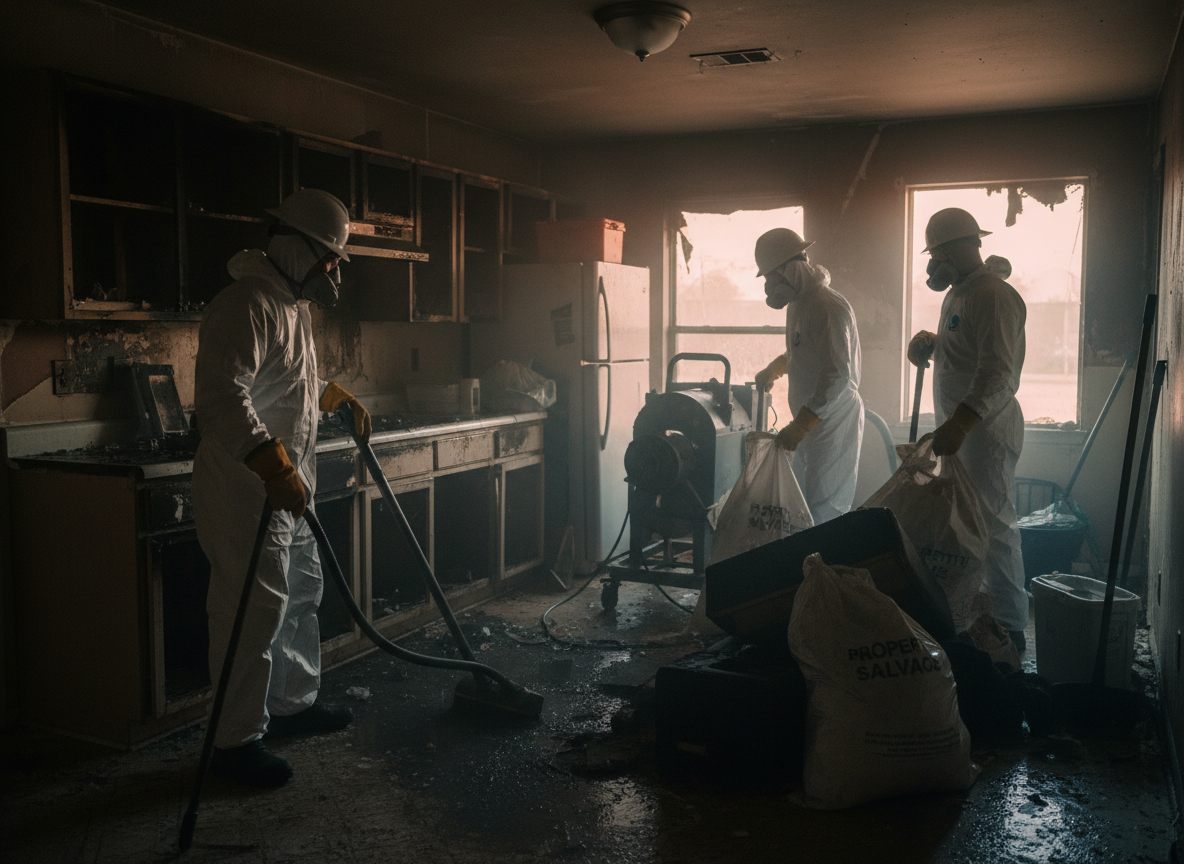
Tenant fire damage cleanup in Webb County requires careful separation of landlord and renter responsibilities, especially in older housing stock around Downtown and San Agustin Plaza where plaster walls and original wood trim absorb heavy smoke residue. Hot semi-arid conditions with strong summer winds push soot deeper into HVAC systems and under baseboards, so crews must test for hidden migration before any surface work begins. Mild winters do not slow corrosion on metal fixtures once acidic smoke residue mixes with the occasional heavy rain that reaches Laredo from the Gulf.
In neighborhoods like Del Mar and Hillside, many rental units sit on concrete slabs with limited crawl space access, making water extraction after suppression efforts slower and more disruptive. Crews often find that smoke has traveled through shared wall cavities into adjoining units, requiring coordination with property managers before walls can be opened. Residue on tile and laminate floors common in McAllen-style builds also demands pH-neutral cleaners to avoid damaging finishes that tenants are responsible for replacing.
Smoke Odor Removal in Rental Units
Odor neutralization in tenant spaces focuses on thermal fogging and air scrubbing rather than ozone in occupied buildings, because Webb County code requires notice to neighbors when strong oxidizers are used.
Soot Removal from Contents
Porous items such as upholstered furniture and clothing stored in Los Presidentes apartments are inventoried, cleaned off-site when possible, and returned only after clearance testing to prevent re-soiling during the dry season.
Technician insight
In Laredo the thing that catches most people out with Tenant Fire Damage Cleanup is how fast dry summer winds push soot under slab edges and into shared walls in older Downtown rentals; once it settles in the limestone soil around the foundation it keeps reappearing on baseboards weeks later if the slab perimeter is not sealed.
Del Mar Apartment Kitchen Fire
A cooking fire in a Del Mar rental sent smoke through the return air duct into two bedrooms. We found soot lodged in the carpet pad and behind the refrigerator. Contents were packed out, the HVAC was cleaned, and the unit passed clearance testing before the next tenant moved in.
How it works
- 1
Initial Assessment
Technician inspects unit, documents tenant-owned items, and notes any structural damage that falls to the landlord.
- 2
Containment Setup
Plastic barriers and negative air machines isolate the affected rooms to keep soot from spreading into unaffected areas during summer winds.
- 3
Soot and Residue Removal
HEPA vacuums and specialized sponges clean hard surfaces; contents are packed out when needed.
- 4
Odor Neutralization
Air scrubbers and thermal fogging treat remaining smoke smell without affecting neighboring units.
- 5
Final Clearance
Visual and air-quality checks confirm the space meets move-in standards for the next tenant.
Pricing
Upfront quote after on-site inspection; cost driven by square footage affected, number of contents, and whether HVAC cleaning is required.