2026-11-23 ·
Summer Fire Prevention Tips for Laredo Backyard Grilling Areas
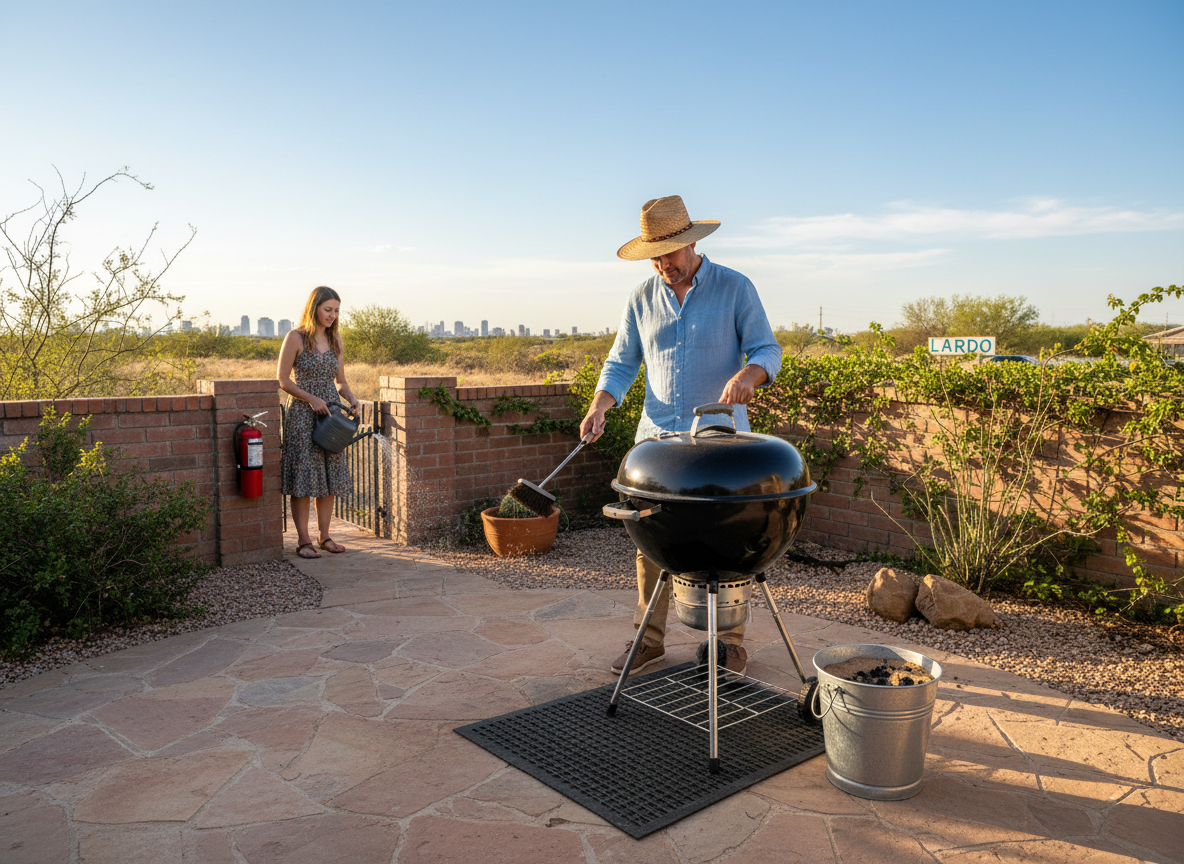
In Laredo's hot semi-arid climate, maintaining a minimum 10-foot clearance between the grill and any structure or dry vegetation cuts the risk of embers igniting nearby fences or siding during summer wind gusts. Homeowners in older Downtown neighborhoods with closely spaced wooden elements benefit most from this buffer, as do properties in Del Mar and Hillside where mature landscaping can dry out quickly between rains.
Assessing Fire Hazards Around Grilling Areas
Laredo backyards often feature gravel or sparse grass that becomes tinder-dry by late May. Walk the perimeter of your grilling zone and identify any dead palm fronds, wooden lattice, or stacked firewood within 15 feet of the grill. In Los Presidentes and Hillside, many lots slope slightly, allowing embers to roll downhill toward neighboring fences. Check for overhead branches from mesquite or oak that could catch a spark when winds pick up from the Rio Grande valley. Note the age of nearby structures; homes built before 1980 in Downtown frequently have untreated wood trim that ignites faster than modern composites. Clearing a 3-foot gravel or paver apron directly under the grill base prevents grease drips from reaching soil or mulch that could smolder undetected. Repeat this inspection monthly through September when temperatures routinely exceed 95 degrees and humidity stays low.
Choosing and Maintaining Grill Equipment
Propane grills require a full inspection of hoses and regulators before the first summer cookout. Look for cracks or brittleness caused by intense UV exposure common in Webb County. Replace hoses every 3–5 years or sooner if they show weathering. Charcoal users should store bags off the ground in sealed bins to keep moisture out, since damp briquettes produce more sparks. Position the grill on a stable, level surface—uneven patios in older Del Mar homes can tip equipment when winds gust. Keep a metal lid and a spray bottle of water within arm's reach at all times. Never use gasoline or lighter fluid on an already-lit fire; the flare-up can travel several feet. Schedule a quick equipment check every spring, focusing on burner ports that clog with grease and create uneven flames that increase fire spread potential.
Safe Setup and Operation During Peak Summer Heat
Place the grill at least 10 feet from the house, garage, or shed, and face it away from prevailing winds that blow from the southwest in July and August. Keep children and pets behind a marked boundary line. Use only approved charcoal starters or electric starters; never squirt lighter fluid directly onto hot coals. Monitor grease buildup on the grill body weekly—accumulated drippings can ignite suddenly when temperatures climb above 100 degrees. In McAllen and Mission, where similar conditions exist, many grill fires start from wind-blown sparks landing on dry mulch beds. Keep a charged garden hose or a 5-gallon bucket of sand nearby. Turn off propane at the tank after every use, not just the control knobs. These habits become second nature after one or two seasons and directly lower the chance a small flare-up turns into structural damage requiring professional intervention.
Emergency Response and Professional Restoration
If flames exceed the grill lid or spread to surrounding vegetation, evacuate immediately and call 911. Do not attempt to move a burning propane tank. Once the fire department clears the scene, contact a local restoration team for soot and smoke assessment. Residue from grill fires often contains grease particles that embed in HVAC systems and attic insulation common in Laredo homes. Early cleaning prevents odors from migrating through ductwork into living spaces. Homeowners in Downtown and Los Presidentes frequently discover hidden damage in older attics where embers travel through vents. Document the incident with photos before cleanup begins to support any insurance documentation. Prompt action limits secondary issues such as corrosion on metal surfaces exposed to the semi-arid air.
Long-Term Prevention for Webb County Homes
Schedule an annual review of your entire outdoor cooking setup each spring before temperatures rise. Replace wooden decks or fences within 10 feet of the grill with fire-resistant composites when they reach 12–15 years old. Trim trees and shrubs so no foliage hangs closer than 10 feet overhead. Store extra propane tanks upright in a shaded, ventilated cabinet away from the house. These steps integrate well with routine property maintenance already performed in Hillside and Del Mar. When a grill incident does occur, understanding the sequence of events helps restoration crews target affected zones efficiently. Resources on smoke movement through HVAC and typical repair costs in Webb County provide further guidance for homeowners planning seasonal safety upgrades.