2026-11-23 ·
How to Remove Soot Stains from Walls After a Laredo House Fire
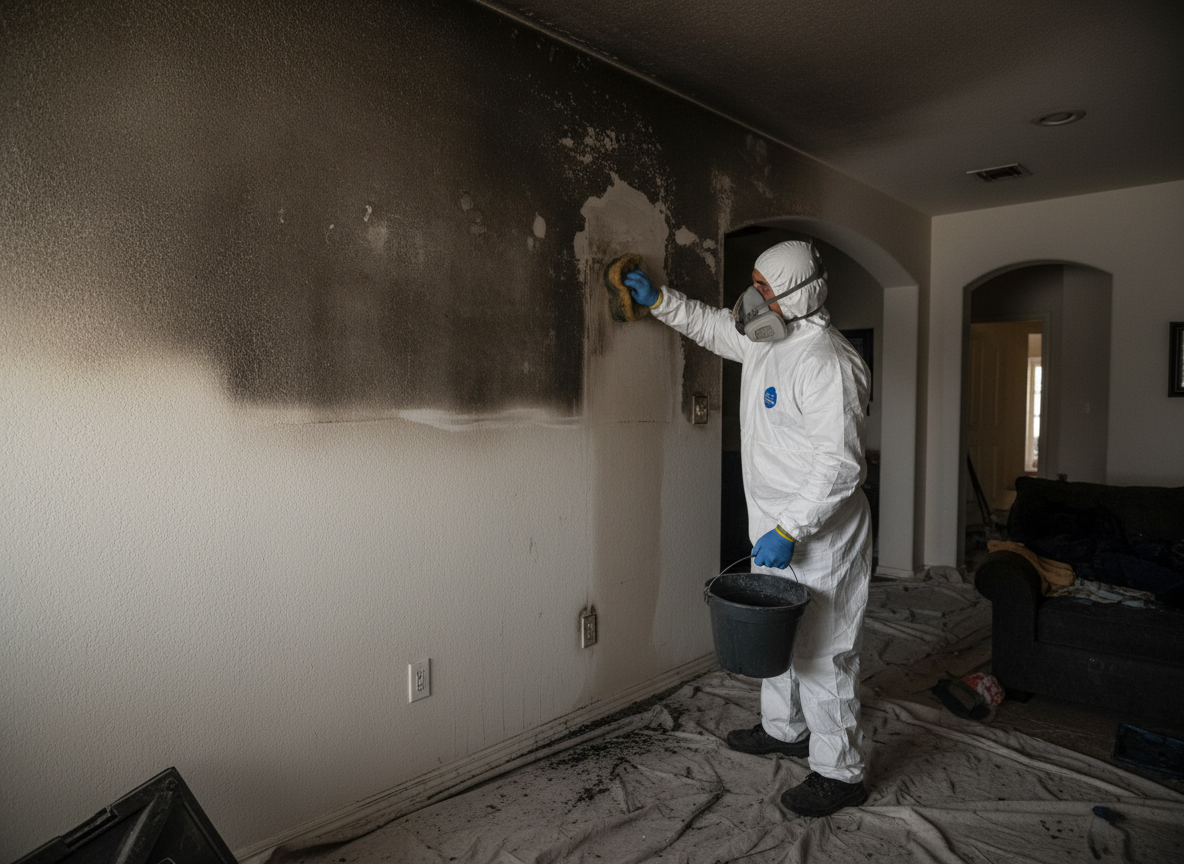
Removing soot stains from walls after a Laredo house fire begins with dry sponging or vacuuming using HEPA filters, followed by pH-neutral cleaners applied in sections; the full process for an average bedroom often takes 6–10 hours once safety measures are in place.
Assessing Wall Types in Older Laredo Neighborhoods
Homes in Downtown Laredo and Los Presidentes frequently feature plaster over lath from the early 1900s that absorbs soot differently than modern drywall found in Del Mar subdivisions. Hot semi-arid summers accelerate soot bonding to these surfaces because low humidity lets particles settle deeper before homeowners notice. Inspect for oily versus dry soot by rubbing a white cloth across the wall; dark residue that smears indicates protein-based soot from kitchen fires common in Webb County. Check for hidden damage behind baseboards where smoke travels upward through stud cavities. Older homes near San Agustin Plaza also have textured finishes that trap particles in crevices, requiring extra passes with a vacuum before any liquid cleaning begins.
Safety Steps Before Starting Soot Removal
Turn off HVAC systems immediately to prevent soot circulation through ducts, a step especially important in Hillside homes where central air runs year-round. Wear N95 respirators and disposable coveralls because airborne particles from fires in nearby Mission or McAllen can linger for days. Test wall stability by pressing gently; fire-weakened drywall in Los Presidentes may crumble during cleaning. Ventilate only after initial dry removal to avoid pushing soot into unaffected rooms. Document every wall section with photos before work starts so insurance claims for properties in these neighborhoods move forward without delays.
Dry Cleaning Methods That Work in Laredo Conditions
Begin with chemical sponges rubbed in one direction only, changing sponges every 4–6 square feet to avoid re-depositing particles on hot summer days when surfaces feel warmer. Follow with a HEPA vacuum on low suction for textured walls common in Downtown Laredo. Repeat the process until the cloth test shows no transfer. These dry steps prevent water rings that form quickly in the region’s low-humidity air. Skip household cleaners at this stage because they can set the stain permanently on plaster surfaces found throughout Webb County.
When Liquids Enter the Process
Mix a solution of warm water and a mild alkaline cleaner only after dry methods remove 80 percent of visible soot. Apply with microfiber cloths in small sections, rinsing frequently, then blot dry immediately because rapid evaporation in hot summers can leave residue lines. Test the solution on an inconspicuous spot first, especially on painted walls in Del Mar homes where latex finishes react differently than oil-based ones. Multiple light applications outperform one heavy soak. Allow walls to dry fully with fans before repainting to prevent blistering during humid periods.
Professional soot removal becomes necessary when stains cover more than one wall or when HVAC systems show signs of contamination. Homeowners in older neighborhoods often combine this work with smoke remediation to address odors trapped in insulation. Review the guide on insurance claim steps after fire damage in older Laredo neighborhoods before starting any repairs.